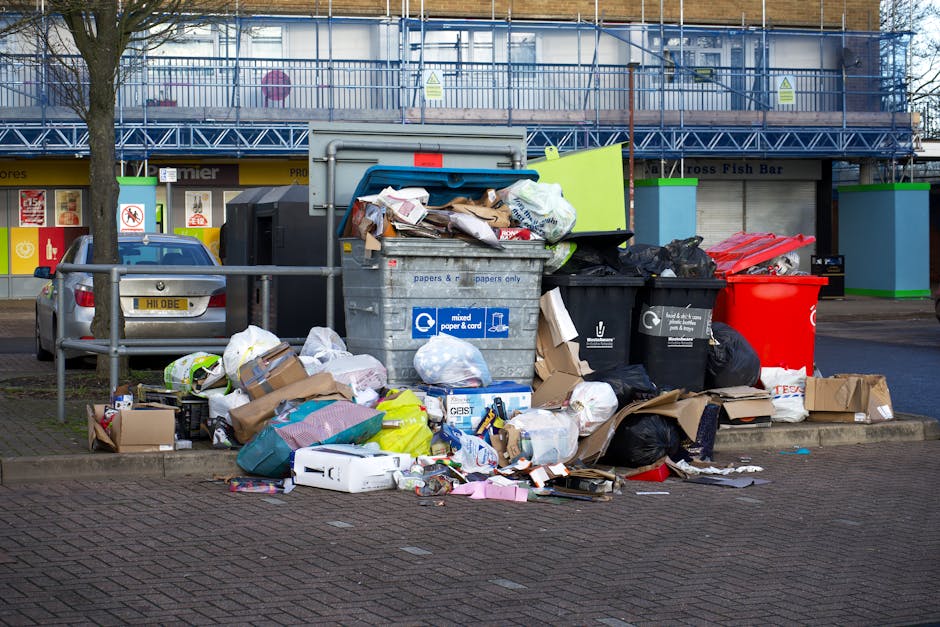
Same day rubbish collection delays what to know in Redbridge
If you've booked a same day rubbish collection in Redbridge and the van still hasn't arrived, you're not alone. Delays happen, and when they do, they can throw off a whole day: a hallway blocked with bags, trades waiting to start, or a landlord asking for the flat to be cleared by evening. This guide explains Same day rubbish collection delays what to know in Redbridge, why they happen, what you should expect, and how to avoid the most common headaches.
Truth be told, most delays are boring rather than dramatic. Traffic, access issues, overrun jobs, parking problems, or a collection that turned out to be bigger than planned. Still annoying? Absolutely. But usually manageable once you know what to look for. Let's walk through it properly, without the fluff.
Table of Contents
- Why Same day rubbish collection delays what to know in Redbridge Matters
- How Same day rubbish collection delays what to know in Redbridge Works
- Key Benefits and Practical Advantages
- Who This Is For and When It Makes Sense
- Step-by-Step Guidance
- Expert Tips for Better Results
- Common Mistakes to Avoid
- Tools, Resources and Recommendations
- Law, Compliance, Standards, or Best Practice
- Options, Methods, or Comparison Table
- Case Study or Real-World Example
- Practical Checklist
- Conclusion
- Frequently Asked Questions
Why Same day rubbish collection delays what to know in Redbridge Matters
Same day rubbish collection is often booked because time really is the issue. Maybe you're moving out. Maybe a renovation has uncovered more waste than expected. Maybe a broken sofa has been sitting in the hall since Monday and you've had enough of looking at it. When a collection is delayed, the inconvenience is rarely just about the rubbish itself. It can affect access, safety, neighbours, and even whether another contractor can do their job on schedule.
In Redbridge, timing matters a bit more than people expect. Residential streets can be tight, parking can be awkward, and many properties have shared entrances or narrow stairwells. A delay of thirty minutes can easily become a bigger issue if the crew can't park close enough, cannot reach the items, or has to wait while someone moves a car. Small details. Big effect.
That is why it helps to understand delays in advance rather than after the fact. If you know what usually causes them, you can plan for a buffer, choose a suitable time slot, and set realistic expectations. Not glamorous, but very useful.
Expert summary: same day collections work best when the booking is accurate, access is clear, and both sides understand that "same day" still depends on traffic, load size, and local access conditions.
How Same day rubbish collection delays what to know in Redbridge Works
A same day rubbish collection usually follows a fairly simple pattern: you request a collection, share the details of what needs removing, receive an estimated arrival window or confirmation, and the team comes out to assess and load the waste. That sounds straightforward, and often it is. But the moment one part of the job is different from what was described, the schedule can shift.
Here's the practical version. If the team is running a tight route across the area, one delayed job can ripple through the day. If your waste turns out to include extra bulky items, more labour may be needed. If the collection is from a top-floor flat with no lift, loading takes longer. If a van cannot stop safely outside, the crew may need to walk items further than expected. None of these are unusual. They just take time.
To be fair, many delays start before the van even arrives. The most common issue is incomplete information during booking. People often underestimate volume, forget about stairs, or mention "a few bags" when the actual job includes furniture, appliances, and a pile of building offcuts. It happens. Everyone underestimates junk at least once.
For a smoother process, think in terms of three stages:
- Booking and assessment: The service needs enough detail to estimate time, labour, and vehicle size.
- Arrival and access: Parking, entry points, and item location affect how quickly the job can begin.
- Loading and disposal: Mixed waste, heavy items, or hazardous materials can slow everything down.
In other words, the collection is not delayed just because "the service is late." Often, the delay is the result of something practical on the ground.
If you're comparing options for a bigger clear-out, pages like general waste removal support or a more specific service such as furniture clearance can be useful starting points, depending on what you actually need shifted.
Key Benefits and Practical Advantages
Despite the occasional delay, same day rubbish collection remains popular because the upside is real. When it works well, it gives you momentum. That matters more than people think. Clutter creates drag, especially in homes and small businesses where space is already tight.
Some of the main advantages are obvious; others show up later in the day when you realise you can finally move again without stepping around bags.
- Speed: You can clear a problem on the same day instead of letting it sit for a week.
- Convenience: Ideal for urgent clear-outs, last-minute handovers, or post-delivery waste.
- Less disruption: No long-term storage of rubbish in hallways, yards, or shared areas.
- Better safety: Reduces trip hazards, fire risks, and blocked access routes.
- More flexibility: Useful when your plans change at short notice. And they do, annoyingly.
There's another advantage that gets overlooked: psychological relief. A pile of waste can quietly drain your energy. Once it's gone, the room feels larger, cleaner, and oddly calmer. It's a small thing, but a real one.
If you are trying to manage costs as well as timing, reading about pricing and quotes can help you understand what usually affects the estimate before you book.
Who This Is For and When It Makes Sense
Same day rubbish collection is not only for emergencies. It suits a surprising range of everyday situations, especially where speed matters more than planning a skip or organising multiple trips to a disposal site.
This service makes sense if you are:
- moving out of a flat or house and need fast clearance
- preparing a rental property for new tenants
- dealing with post-refurbishment debris
- clearing bulky furniture after a replacement delivery
- tidying a garage, loft, shed, or spare room before visitors arrive
- sorting a business space that can't stay cluttered for long
- handling a one-off overflow after a house clearance or garden job
It is also a practical choice for people who simply do not want waste sitting around. Let's face it, the sight and smell of old rubbish in warm weather is enough to make anyone move faster. If that sounds familiar, same day collection can be the right call.
For property clear-outs, you may also want to look at services such as house clearance, flat clearance, or office clearance depending on the setting. Each has its own pace and access challenges.
Step-by-Step Guidance
If you want fewer delays, the best approach is to prepare the job properly from the start. A few minutes of detail at the booking stage can save an hour of waiting around later. Here's a practical way to handle it.
- List everything that needs removing. Be specific. "Old furniture" is a bit vague. "Two wardrobes, one broken desk, three bin bags, and a mattress" is much better.
- Check access carefully. Think about stairs, lifts, coded doors, parking restrictions, and narrow entrances. A van can only do so much if it cannot stop near the property.
- Separate anything unusual. Items such as fridges, paint, chemicals, or other special waste may need different handling. If you are unsure, ask before the day arrives.
- Take quick photos. This is especially helpful for larger clearances. It gives a far clearer picture than a vague description. Very handy, really.
- Confirm your preferred time window. If you have appointments, builders, or school runs, say so early. The more precise the information, the less guesswork involved.
- Make the waste easy to reach. If safe and practical, move items closer to the exit. A tidy staging area often speeds things up more than people expect.
- Stay reachable. If the crew needs clarification, a quick call or text can keep the job moving.
One useful habit: assume there may be a small delay and build that into your day. A little buffer removes a lot of stress.
If you are dealing with larger or heavier items, mattress and sofa disposal and fridge and appliance removal are the sort of specialist pages worth checking because these jobs often need extra handling time.
Expert Tips for Better Results
In our experience, the smoothest same day collections are rarely the fanciest ones. They are the ones where the basics are done properly. Simple as that.
- Measure big items before booking. A sofa that "looks standard" can still be awkward in a narrow stairwell.
- Be honest about volume. Understating the amount of rubbish usually causes more delay than overexplaining it.
- Tell the team about parking early. Redbridge streets can be busy at certain times, and parking can become the bottleneck.
- Ask what happens if access changes. For example, if a neighbour blocks the drive or a lift is out of service.
- Keep fragile or important items separate. It reduces confusion at loading time.
- Choose the right service type. A general rubbish removal booking is not the same as a clearance for furniture, garden waste, or building debris.
One slightly silly but true point: if you can't tell at a glance what is rubbish and what is staying, neither can the crew. Labeling or grouping items can save awkward back-and-forth.
Where sustainability matters, it is worth asking how recyclable materials are separated. Services that discuss recycling and sustainability tend to be clearer about what happens after collection, which can help if you want a more responsible option.
Common Mistakes to Avoid
Most delays are avoidable, or at least reducible. The following mistakes are the ones that cause the most frustration.
- Booking too late in the day without flexibility. Same day does not mean instant. It still depends on route planning.
- Giving a rough estimate instead of a real one. "A few bags" can become three loads if you're not careful.
- Ignoring access issues. One locked gate or blocked curb can push everything back.
- Leaving items in hard-to-reach places. Loft corners and basement storage add time, especially if stairs are tight.
- Mixing regular waste with specialist items. Hazardous or restricted materials need separate handling.
- Forgetting about neighbours or shared rules. In flats and terraces, a quick heads-up can avoid friction later.
Another common one: booking a clearance for the whole job when actually you only need help with one category of waste. That can lead to mismatched expectations. Better to be specific and, if needed, ask about a more targeted service first.
Tools, Resources and Recommendations
You do not need fancy tools to organise a collection well, but a few basic things help a lot. Think practical, not technical.
- Phone camera: Photos help describe the waste accurately.
- Measuring tape: Handy for bulky furniture or appliances.
- Notes app: Useful for listing items, access points, and any odd instructions.
- Labels or tape: Good for separating keep, donate, and remove piles.
- Bin bags or boxes: Makes loose waste easier to move safely.
It also helps to compare service pages before booking, especially if you are not sure what type of clearance is most suitable. For example, garden waste, loft clutter, and office junk all behave a little differently on collection day. The more you match the service to the job, the fewer surprises you get.
If your waste includes mixed household clutter, a service like home clearance may be a better fit than a general one-off pickup. For garage or loft jobs, the extra access and sorting time can matter more than you'd think.
Law, Compliance, Standards, or Best Practice
When rubbish is removed from a property, the job should be handled responsibly. In the UK, waste must be managed by people who are properly equipped to transport and dispose of it lawfully. You do not need to become a compliance expert, but you should be comfortable asking a few sensible questions before booking.
Best practice usually includes:
- clear description of the waste type
- safe handling of sharp, heavy, or awkward items
- separation of restricted or hazardous materials
- appropriate transport and disposal routes
- careful handling of property and communal areas
If you are clearing items that might be hazardous, contaminated, or unusually difficult to dispose of, ask directly how those items are handled. A proper response should be specific, not vague. If someone brushes past the question, that's usually a warning sign.
For businesses, the bar is often a bit higher because you also need to think about duty of care, confidentiality, and minimising disruption to staff or customers. Services such as business waste removal and confidential shredding can be relevant where paperwork or workplace waste is involved.
Safety matters too. It is wise to choose a provider that can explain how they manage lifting, loading, and transport. Pages like insurance and safety and health and safety policy are worth reviewing if you want a better sense of the standards behind the service.
Options, Methods, or Comparison Table
If your collection is delayed or you are trying to decide the quickest route, it helps to compare the common options side by side. What looks cheapest or fastest on paper is not always the easiest in practice.
| Option | Best for | Typical strengths | Possible drawbacks |
|---|---|---|---|
| Same day rubbish collection | Urgent domestic or commercial waste | Fast, flexible, minimal effort for the customer | Can be affected by traffic, access, or load size |
| Skip hire | Longer projects with steady waste generation | Good for ongoing renovation work | Needs space, permits may be needed, waste sits on site |
| Self-haul to a disposal facility | Small amounts and flexible schedules | Direct control over timing | Requires transport, lifting, and your own time |
| Specialist clearance service | Bulky, awkward, or sensitive items | More suitable for item type and access conditions | May cost more if the job needs extra labour |
For many Redbridge residents, same day collection is the most balanced choice when speed and convenience matter more than long-term storage. If the job is larger or more specific, another method may be calmer and cheaper in the end. Sometimes the sensible answer is not the flashiest one. That's fine.
If you are considering alternatives, these pages can help you narrow things down: what can go in a skip and builders waste clearance.
Case Study or Real-World Example
Here's a realistic example from the kind of situation people in Redbridge run into all the time. A couple had just finished replacing old wardrobes and a mattress in a first-floor flat. The booking was made for the afternoon because they expected the job to be quick. On arrival, the crew found the wardrobe panels were heavier than expected, the hallway was narrow, and there was a parked car blocking close access. Nothing unusual, just a bit fiddly.
The result? The collection still happened the same day, but not at the exact hour originally hoped for. Once the car was moved and the items were grouped properly, the load was completed without drama. The delay was about access, not failure. And that distinction matters.
The lesson is simple: most same day delays are not a sign that the service is unreliable. They usually mean the job needed slightly more information, a more realistic time window, or better access on arrival. In a busy part of London, that's pretty normal.
Another common pattern is during a house move. You think there will be three bags and a broken chair. Then, after emptying the shed, you discover a small mountain of old boxes, faded decorations, and a lawnmower that has not moved since 2018. Suddenly, the "quick" collection is not quite so quick. Happens all the time.
Practical Checklist
Use this quick checklist before your collection day. It is simple, but it catches most of the avoidable problems.
- Have I described every item clearly?
- Have I checked access, parking, stairs, and lifts?
- Do I know whether any items need special handling?
- Have I separated rubbish from anything I want to keep?
- Are the items easy to reach?
- Is someone available to answer calls or messages?
- Have I allowed a little time flexibility in my day?
- Do I understand what the service includes and what might change the price?
- Have I asked about recycling or disposal where relevant?
- Am I clear on what happens if the crew arrives and access is different from expected?
That's the sort of list that saves stress later. Nothing fancy. Just practical, which is usually what you want on a busy day.
Conclusion
Same day rubbish collection delays in Redbridge are usually manageable once you know what causes them. In most cases, the problem is not the concept of same day service itself, but the details around access, load size, parking, and waste type. Get those right, and the process is far smoother.
If you remember only one thing, make it this: the clearer your information, the less likely you are to get caught out. A good provider can work quickly, but even the best team still needs the basics to line up. A tidy description, realistic timing, and a clear path to the waste go a long way.
So if you are staring at a pile of rubbish and wondering whether today's collection will actually happen, take a breath, check the details, and keep the lines of communication open. That alone solves more problems than people expect. And once it is all gone, the room feels different. Quieter somehow. Better.
Get a free quote today and see how much you can save.
Frequently Asked Questions
Why is my same day rubbish collection delayed in Redbridge?
Delays are often caused by traffic, parking trouble, access issues, extra waste volume, or a previous job overrunning. In busy parts of Redbridge, even a small hold-up can change the schedule.
How late can a same day collection arrive?
That depends on the service provider and the day's route. Some bookings use a time window rather than an exact arrival time because traffic and job length can change the plan during the day.
What should I do if the crew has not arrived yet?
Check your phone first, then look for any messages or updates. If you have not heard anything and the window has passed, contact the provider and confirm access, parking, and any special instructions.
Can I still get a collection if I live in a flat?
Yes, but flats can take longer because of stairs, lifts, shared entrances, and parking. It helps to explain access clearly at the booking stage so the team can plan properly.
Does more rubbish mean a bigger delay?
Often, yes. If the amount is larger than expected, the crew may need more time or an additional vehicle. That is why it is better to describe the load accurately from the start.
Are bulky items slower to collect?
Usually they are. Sofas, wardrobes, mattresses, and appliances can take more time to move safely, especially in narrow hallways or upper-floor properties.
What can I do to avoid delays?
Give accurate details, clear the access route, mention parking issues, and keep the rubbish easy to reach. A few minutes of preparation can make the job much smoother.
Is same day rubbish collection more expensive if there is a delay?
Not always, but delays caused by incorrect information, hard access, or extra waste may affect the quote or the time needed to complete the job. It is best to confirm the likely cost structure in advance.
Can hazardous items cause a delay?
Yes. Items such as chemicals, paints, and certain electrical or contaminated materials may need special handling. Always ask first rather than assuming they can go with general waste.
What is the difference between same day collection and next day collection?
Same day collection is designed for urgent jobs and faster turnaround. Next day collection may be easier to schedule but is less useful if you need the waste gone immediately.
Should I choose a clearance service or a skip?
If you want the waste removed quickly with little effort, a clearance service is often better. If you are doing a longer project and can store waste on site, a skip may suit you more. It depends on space, timing, and the type of rubbish.
What if I am not sure how much waste I have?
Take a few photos and send a clear description. If needed, ask whether the provider can assess the load before starting. That is usually better than guessing and hoping for the best.