Commercial Waste Redbridge — Insurance & Safety Assurance
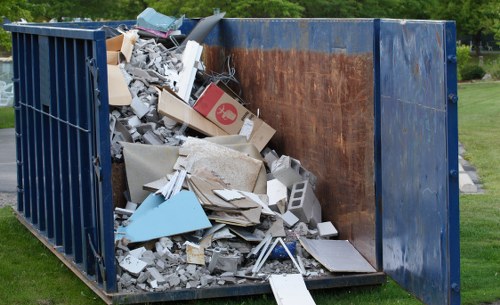 At Commercial Waste Redbridge we prioritise protection and professionalism when supplying commercial waste services. Choosing an insured rubbish company is not optional for businesses that require reliable, compliant waste removal; it is essential. Our overview explains how public liability insurance, robust staff training, appropriate personal protective equipment, and a systematic risk assessment process work together to protect clients, the public and our crews. We explain what makes an insured waste removal company trustworthy and how these safety measures reduce operational risk.
Public liability is the cornerstone of any legitimate commercial waste provider. A fully insured rubbish removal company carries policies that cover third-party injury and property damage arising from collection, transport and disposal activities. Policies commonly include cover limits tailored to commercial contracts, and the ability to produce a certificate of insurance on request. Public liability insurance reassures businesses that a clear financial mechanism exists to remedy accidental harm, and that the waste contractor has the financial backing to manage incidents professionally.
 Certificates, policy wording and insurer details are always available for review by clients and procurement teams considering an insured waste company. We encourage contract managers to confirm: the insurer, the policy limits, whether pollution liability is included, and the period of cover. In addition to public liability, reputable commercial waste firms maintain motor and employer’s liability cover, which together create a comprehensive shield that supports client confidence and regulatory compliance.
- Public liability for third-party claims
- Employer's liability to protect staff
- Motor and vehicle insurance for fleet operations
Staff training and competence for waste operations
Well-trained teams are a defining feature of an insured rubbish company that consistently meets safety standards. Our approach to staff development emphasises practical competence, legal understanding and ongoing refreshers. Inductions cover manual handling, segregation of commercial waste streams, safe loading procedures, and incident reporting. Field supervision and periodic competency checks ensure that learning translates into safe working behaviour. These programmes reduce the frequency and severity of accidents and support the insurance position by demonstrating proactive risk management.
 Training is delivered via a mix of classroom sessions, on-the-job mentoring and digital learning modules. For commercial waste collectors the curriculum includes correct use of lifting aids, safe operation of tail lifts, hazardous waste awareness and spill response. Regular toolbox talks reinforce seasonal hazards such as icy conditions or increased traffic. An insured rubbish removal company documents all training and maintains records as evidence for insurers, clients and regulators.
Pools of experienced supervisors and a structured induction for new hires are combined with a permit-to-work style mindset for complex or high-risk jobs. Our commitment is to keep crews updated on best practice so that the insured waste collection service delivered to clients remains consistent, safe and auditable.
- Formal induction and refresher training
- Competency records and supervision
- Incident reporting and learning reviews
Personal Protective Equipment (PPE) and operational controls
PPE is a visible demonstration of an insured commercial waste company's commitment to crew safety and regulatory compliance. Our policy ensures that operatives receive the right PPE for the task: high-visibility clothing, gloves rated for the materials handled, steel-toe footwear, eye protection and respiratory protection where required. The selection is risk-based, reflecting the hazards encountered on site and during transport. PPE is complemented by engineering controls such as secure tailgate platforms, locking bins and hydraulic safety cut-outs.
 The PPE programme includes fit checks, replacement schedules and storage protocols to maintain effectiveness. Supervisors complete routine audits of PPE use and condition, and failures trigger immediate remedial action. For sensitive commercial contracts, enhanced PPE standards can be applied to meet client requirements, and these changes are recorded in the safety plan and insurance documentation.
 Risk assessment is the process that binds insurance, training and PPE into a coherent safety system. Every job is preceded by a documented assessment that identifies hazards, evaluates risks, and sets out control measures. Assessments cover site access, traffic risks, manual handling loads, presence of hazardous materials and environmental sensitivities. The recorded outcomes determine staffing levels, required PPE, and any additional controls such as traffic marshals or temporary signage.
The risk assessment process is iterative and includes monitoring and review. Following an incident or near miss, the assessment is updated and training refreshed if necessary. Insurers look favourably on businesses that demonstrate a cycle of assessment, control, monitoring and continuous improvement. This cycle not only reduces the likelihood of claims but also supports faster, evidence-based claims handling when events occur.
Choosing an insured waste removal service means selecting a partner that integrates insurance cover, staff competence, effective PPE provision and a structured risk assessment process. By maintaining clear records, demonstrating continual staff development and applying appropriate controls, commercial waste firms protect client interests and create a safer working environment. For organisations in Redbridge seeking an insured rubbish service, these measures provide tangible assurance that waste will be managed safely, legally and professionally.
